Become a Modular Developer Today!
Become a Modular Developer Today! Groundbreaking Opportunity from Established Global Leaders By becoming a modular developer with us, you gain the rights and access to build new, steel modular homes in your market. The advantages are clear: we offer a superior-quality product at 2008 price points, not inflated 2026 prices. Our mission is to provide relief in today’s challenging housing market. As a modular developer, you can expect high demand for your services, thanks to our combination of competitive pricing and exceptional quality. We utilize stronger materials and innovative designs that reduce future maintenance, ensuring each home is built for long-term value rather than ongoing service needs. Another key advantage is that all of our designs are developed in-house. Unlike catalog companies that purchase and resell third-party designs, we control every aspect of the design process to ensure originality and quality. Our company stands out because we are not a catalog modular home provider. We have an in-house engineering team responsible for designing and manufacturing every home, giving us complete control over quality and innovation. Our extensive design portfolio was developed during the COVID-19 lockdowns, allowing us to thoughtfully structure our company for long-term stability and adaptability. Regardless of market fluctuations, we remain committed to delivering superior products that create generational wealth for our clients. Founded by friends and family, our business is built to be a lasting legacy, dedicated to providing high-quality, affordable modular homes. There is a licensing fee required to become a modular developer, which we will disclose after you join our team room. To learn more, visit our site and follow the steps to get vetted and verified. Before proceeding, we want to provide examples of leading real estate opportunities and franchises in today’s market. This will help you appreciate the affordability and value of our offer, especially as we provide solutions that deliver 2008 pricing in the current market environment. Given today’s home prices, we are committed to offering clients contemporary designs with optimal space utilization. In addition, we provide fully furnished home solutions, ensuring a true turn-key experience—clients can simply move into a beautifully furnished home. To learn more about how this process works, join our team room, where we will break down the details and answer any questions you may have. Partnering and licensing with SARALJO is not about adding extra costs—it’s about empowering you as a business owner. We are dedicated to building brand-new, sustainable, premium homes from the ground up that are truly affordable for the average American. Unlike others, we do not rely on recycled inventory that inflates prices and burdens homeowners. At the core of our company is a commitment to giving back to the community—not maximizing profits through price gouging. We enable you to offer a superior product: homes with unmatched strength compared to traditional wood construction, faster production turnarounds, and the option of fully furnished spaces—all while keeping costs down. With SARALJO, you gain a compelling alternative to what’s currently available in today’s market. If you want to be part of the solution to the global real estate challenge, join us. Below, we’ve provided an overview of the industry’s leading companies and the costs associated with becoming a business owner through them. Century 21 Real Estate (1) https://www.century21.com/franchise Initial Investment Breakdown (Start-up) Franchise Fee: Up to $25,000. Total Investment: $106,200 – $451,350 (varies by location; generally higher than several competitors, such as NextHome and Realty ONE Group, but similar to Keller Williams and RE/MAX at their upper ranges). Liquid Capital: $75,000. Net Worth: $150,000. Other Costs: Include leasehold improvements, equipment, signage, marketing, training, and working capital. Ongoing Fees Royalty Fee: 6% of gross revenue. Advertising Fee: 2% of gross revenue. Property Management Fee (if applicable): 1.5% of property management revenue. Key Considerations Location Matters: The biggest factor in total cost is whether you’re converting an existing space or building new. Conversion Offices: Cheaper, ranging from approximately $24,700 to $279,000. Resources: Century 21 provides strong brand recognition and support, with systems, marketing, and tech access RE/MAX (2) Home Opening a RE/MAX franchise requires a total investment, including an initial franchise fee of $17,500-$37,500, required liquid capital of around $35,000, and ongoing fees such as royalties and monthly per-agent fees for management, marketing, and tech. Costs vary by location and setup, covering office build-out, signage, training, and working capital, with many options allowing an initial outlay of under $100k. Initial Investment Breakdown (Estimated) Initial Franchise Fee: $17,500 – $37,500. Total Estimated Investment: $40,000 – $240,000 (lower starting range than Century 21 and Keller Williams, but the upper end is still substantial). Cash/Liquid Capital Needed: Around $35,000. Office Setup: $3,500-$72,000. Signage: $500-$10,000. Furniture & Equipment: $2,000-$41,000. Working Capital: $15,000 – $50,000 (for 3 months). Ongoing Fees Management Fee: Around $138/month per agent (variable). Promotion/Marketing Fund: Approximately $131 per agent per month (variable). Annual Dues: About $410 per agent. Royalty Fee: A percentage of gross commissions; the amount varies by region or agreement. Key Factors Control: Many initial costs, such as office space and equipment, are under the franchisee’s control. Support: RE/MAX provides extensive training, marketing assistance, and business development resources. Location: Both initial and ongoing costs fluctuate significantly by market and area. ERA Real Estate (3) Home An ERA Real Estate franchise costs approximately $33,000 to $447,000 in total investment, with an initial fee of up to $25,000, plus a 6% royalty and a 0.5% to 1.5% ad fee, requiring around $75,000 in liquid cash and $150,000 in net worth, though specific figures vary by location and office. Key Costs & Requirements: Initial Franchise Fee: Up to $25,000. Total Initial Investment: Ranges from roughly $33,370 to $447,100 (may be lower than Century 21 or Keller Williams at the entry level). Liquid Capital: About $75,000 needed. Net Worth: Minimum of $150,000. Royalty Fee: 6% of gross sales. Advertising Fee: 0.5% to 1.5% of gross sales. Factors Influencing Cost: Location: Market conditions and office size impact the total investment. Office Setup: Costs include deposits, training, and initial working capital. In essence,
We are offering 2008 Home Prices in 2026!
We are offering 2008 Home Prices in 2026 Groundbreaking Opportunity from Established Global Leaders Remember 2008? The Great Recession wasn’t just a headline—it was a wake-up call for families, realtors, banks, buyers, and sellers everywhere. The housing market, oversaturated since 2006, finally collapsed, sending interest rates soaring and wiping out savings across the board. We eventually recovered, but looking at today’s market, it’s hard not to feel a sense of déjà vu. While 2008 brought plenty of hardship, it also offered something we rarely see now: attainable housing prices. We are offering 2008 Home Prices in 2026! Yes, that line is correct. Our goal, in a nutshell, is to establish a baseline: the standard we would set for home buyers to purchase new homes at the rates at which homes were actually selling in 2008. On top of that, we’re going to build differently. We’re going to use better materials, so the end result will be a better product. Many companies use technology to cut costs—but those savings rarely reach the buyer. Instead, profits are prioritized, often at the expense of quality and customer value. We’re different. By harnessing efficient building methods and advanced materials, we pass the savings directly to you, ensuring you get both superior quality and a fair price. We refuse to accept that overpriced housing is the new normal. Instead of following the crowd and overpaying, we’re committed to improving the housing market. The facts are clear—the numbers don’t lie—and together, we can push back against inflated prices. Our mission is simple: to deliver affordable, sustainable comfort with a premium feel—without the premium price tag or cutting corners. We’re here to help you turn a house into a true home and restore a sense of security, all while resisting the pressures to settle for less. Trust our process, and let us help you change your world. In 2008, a 3,000-square-foot house typically cost between $270,000 and $350,000 on a national average, depending heavily on the location. Because 2008 was the year of the housing crash, prices varied drastically depending on whether you bought at the early-year peak or the late-year drop. Nationally, the U.S. Census Bureau reported an average home sale price of about $292,600. However, regional variations meant that a home of this size in a high-cost area like Washington State or California might have exceeded $450,000, whereas the same house in the Midwest or a declining “sunbelt” market could have sold for under $220,000. To put this into perspective for Washington, in 2008 the statewide Home Price Index averaged about $480,000, meaning 3,000-square-foot homes were notably higher-priced than the national average. We present an up-to-date overview of real estate trends in the United States and around the world, considering past, present, and future developments. I hope you find this information valuable as you navigate your real estate journey, putting in the effort and gaining perspective to achieve the outcome for your future. Receipts In 2008, a 3,000-square-foot house typically cost between $270,000 and $350,000 on a national average, depending heavily on the location. Because 2008 was the year of the housing crash, prices varied drastically depending on whether you bought at the early-year peak or the late-year drop. https://www.foxbusiness.com/lifestyle/average-cost-american-home-decade-born-1940s-present-day Nationally, the U.S. Census Bureau reported an average home sale price of about $292,600. However, regional variations meant that a home of this size in a high-cost area like Washington State or California might have exceeded $450,000, whereas the same house in the Midwest or a declining “sunbelt” market could have sold for under $220,000. https://www.macrotrends.net/3979/washington-home-price-index To put this into perspective for Washington, in 2008, the statewide Home Price Index averaged about $480,000 overall, meaning 3,000-square-foot homes were notably higher priced than the national average. X Home About Us Why Steel Volumetric Construction Turn Key Turn Process Research & Development Modules Dux Blocs Helical Pile Our Modals Home Buyers Real Estate Investors Recent news and events Build.Construct. Design Your future with modular solutions. Experience Efficiency
The Aeneas Model
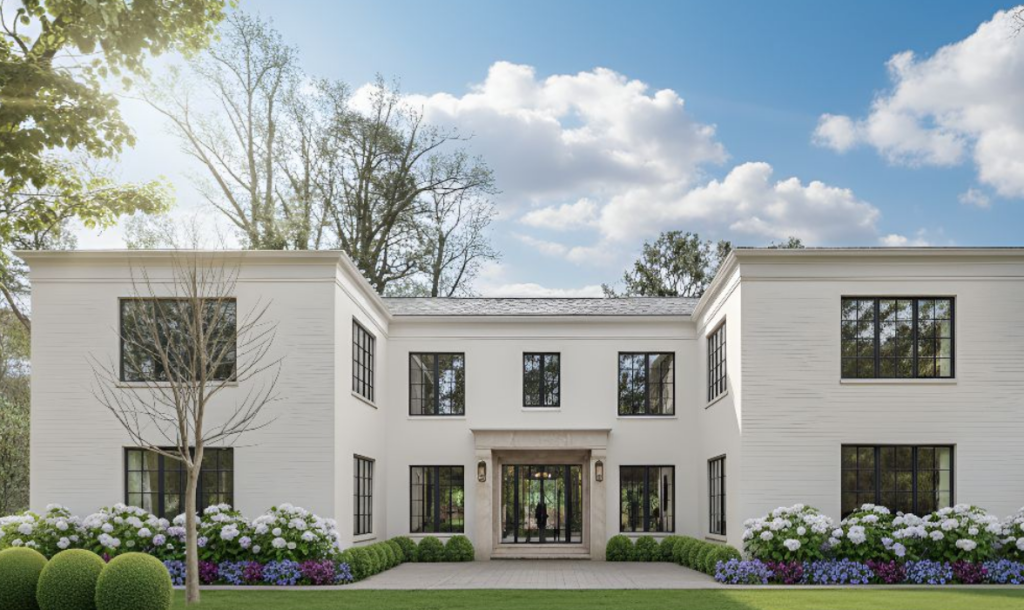
The Aeneas Model Groundbreaking Opportunity from Established Global Leaders We are thrilled to introduce a brand-new, revolutionary 9,700-square-foot home, built with commercial-grade steel frames to deliver unparalleled value, security, and flexibility. How were we able to build this? By leveraging our technology and innovation to build differently, we ensure a greater and better outcome for you. We’ve put together an entire page with a wealth of information for you to read. After you review the details here, we’ll provide links to other pages where you can learn even more. It’s crucial to know that we are not a new start-up. We have been in business for over 20 years, with a proven track record and clients in over 30 countries. We are a well-established American company, backed by a large manufacturer with multiple factories in Asia that produce state-of-the-art product designs and industrial truck parts, shipping them to the USA, Australia, Europe, and worldwide. Now, we are strategically expanding our investment portfolio to manufacture volumetric modular homes. Leveraging our expertise and independent supply chain, we decided to create one large, affordable modular home—the Aeneas Model. With the cost of everything increasing, we asked: What is the maximum bang for the buck? The answer is a home you can buy with unique fail-safes built into the design, so it can no longer be a burden. If you, as a homeowner, lost your job in your state, had to relocate to another state, or needed to sell, you could do so effortlessly while generating much-needed income from the property. This will be a limited run of homes. They are not available for purchase at this time, but you can sign up on our waiting list if you wish to have one built. Right now, we are focused on establishing a network of developers who will bring these homes to market and help assemble them, while we control the price points. The qualifications for becoming a new modular home developer are simple. You simply need the resources to complete modular builds. This exclusive opportunity is open to a handpicked group of developers. We are offering this opportunity to a small group of people who want to start building modular homes. Only a select few will be approved in the U.S. market, determined by a specific unit count. When enough qualified partners are ready to order and build modular homes, the window for new applicants will close. In some areas, there may be no modular developers at first; these regions will be set aside for current partners to ensure they continue to benefit. The company is committed to preventing market over-saturation and to choosing exceptional partners over simply growing the participant pool. Uncompromising Steel Frame Construction & Intelligent, Flexible Design Again, these are steel-frame modular homes, not wood-frame homes. They are built with commercial-grade steel frames, engineered over-spec for residential use, guaranteeing exceptional strength and longevity. The bedroom sizes and floor plan layouts are custom-built. We will show you photos of homes already on the market with over 9,700 square feet so you can visualize the potential. The homes are designed with a left wing, a middle section, and a right wing. The idea is that the Aeneas Model looks and functions like a normal, luxurious home, with its genius lying in its intelligent tri-wing layout. The home is divided into three distinct, self-contained sections. But here is the key innovation: each section—the left wing, middle section, and right wing—will be a minimum of 3,000 square feet of livable area. This means you can technically live in and enjoy the entire home as one unit, or you can rent out your center section and live in the two left- and right-wing units. Alternatively, you can live in the middle section and rent out the two wings. You choose whichever configuration works best for you. This flexibility allows you to generate enough money to pay for your mortgage, the insurance on the property, and even your car payments if you find yourself not working. The benefits and fail-safes of this design are clear: if you or your spouse lost your job, you can instantly downsize. You could move out of the left wing and center section, for example, and live comfortably in one section. You can rent the left wing and the center section, and continue living with your family in the right wing. That way, you wouldn’t lose your investment due to a sudden change in income. And if the market collapses, you are not left upside-down. This model is designed with an estimated $500,000 to $750,000 in equity already built in. To help you with your research, we have put together the current prices of existing homes over 9,000 square feet across the U.S. You can follow the links we provide if you live in one of these regions. We have conducted online research and collected screenshots to help you conduct your own due diligence. Single or Multi-Family Living & Building Generational Wealth The benefits extend beyond families seeking compound living. You can have parents in one wing (the left wing) and your children in another section (the right wing), leaving the middle section as a shared living and recreational area for everyone. Consider the transfer of generational wealth. If, for instance, your parents have reached old age and would like to move closer to you, you can easily accommodate them in a single 3,000-square-foot section of the home. They may either lease out their existing traditional home, or sell it to access the equity to take care of themselves in their new home, or assist you in making mortgage payments towards the Aeneas Model. You can then move mom and dad to the middle section or another wing of the new house, while using the other wings for yourself and your kids. This way, everyone wins: they gain a modern living arrangement in a 8 to 12-bedroom compound, while managing the financial aspects of their relocation without worry. This is how